MSN Messenger was more than a contact list. Its conversations could include online games, turning an ordinary chat into a shared activity without asking either person to install a separate title. Minesweeper Flags was one of the clearest examples of that idea.
Games that began inside the conversation
The unusual strength of Messenger games was not technical complexity. It was context. The other player was already a contact, the conversation remained open and a match could become part of whatever the two people were talking about.
That solved the hardest problem for many casual multiplayer games: finding someone to play with. There was no separate account, public lobby or long tutorial between the invitation and the first move. A familiar board and a known opponent were enough.
The arrival of MSN Messenger 6.0
Microsoft announced MSN Messenger 6.0 in 2003 with a stronger focus on personal expression and shared activities. Contemporary Microsoft News posts named online games including Tic Tac Toe, Solitaire Showdown and Minesweeper Flags. The titles lived within the Messenger experience rather than being presented as unrelated downloads.
This matters to the history of Minesweeper Flags. Its identity was social from the beginning. The mode did not simply add a score to a solo puzzle; it redesigned the objective around a second person who could use the same clues against you.
How Minesweeper Flags changed the puzzle
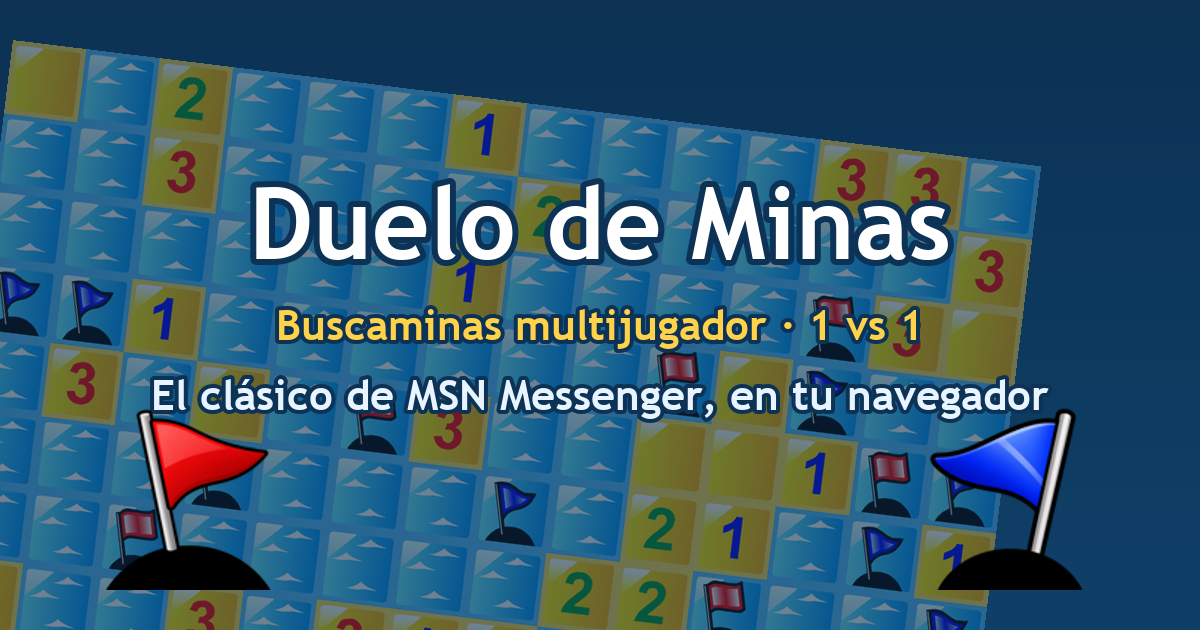
Classic Minesweeper asks one player to reveal every safe square while avoiding mines. Flags are notes used to mark danger. The Messenger variant turned the mines themselves into the score.
- Two players took turns selecting covered squares on one shared board.
- A mine became that player's flag, added a point and allowed another move.
- A numbered square passed play to the opponent.
- The numbers still counted adjacent mines, including diagonals.
- With 51 mines, capturing 26 secured the majority.
The result combined logic, risk and tempo. Revealing a number might help you solve the board, but it also handed the same clue to the other player. A certain mine could begin a chain of points before the opponent moved again.
Why the game remains memorable
Minesweeper Flags joined three simple ingredients: rules many people already knew, immediate competition and a specific person on the other side. A short match could create a conversation of its own: a risky guess, a long capture chain or a late comeback became something to react to together.
Messenger also belonged to a particular period of online life. Contact status, personal messages and notification sounds made being “online” feel like an event. The games borrowed that social energy. People often remember who they played against as clearly as they remember the board.
The design still feels relevant because it reduces friction. Modern online games often require a download, account and matchmaking queue. The old Messenger flow showed that a link, a friend and familiar rules can be enough for a satisfying multiplayer moment.
A modern, independent way to play
Duelo de Minas is an independent browser interpretation of that social format. It keeps a 16 × 16 board, 51 mines, alternating turns and victory at 26 captures. It adds options suited to current devices:
- Private room: create a code and send the direct invitation link.
- Online opponent: find another available player through the public harbour.
- Computer opponent: practise immediately at easy, medium or hard difficulty.
- Responsive play: use the same game on a phone or computer without registering.
New players can learn the clue rules in the complete beginner guide. Players who know Minesweeper can move to the competitive strategy guide for chains, turn control and bomb timing.
Sources and relationship with Microsoft
The historical references in this article use Microsoft's own 2003 publications:
- MSN Gives Consumers 1,000 More Reasons an Hour To Upgrade to MSN Messenger 6.0.
- MSN Messenger 6 Allows IM Lovers to Express Themselves With Style.
Duelo de Minas is an independent fan project. It is not affiliated with, authorised, sponsored or approved by Microsoft Corporation. It does not use Microsoft logos, product icons or screenshots. Mentioned trademarks belong to their respective owners.